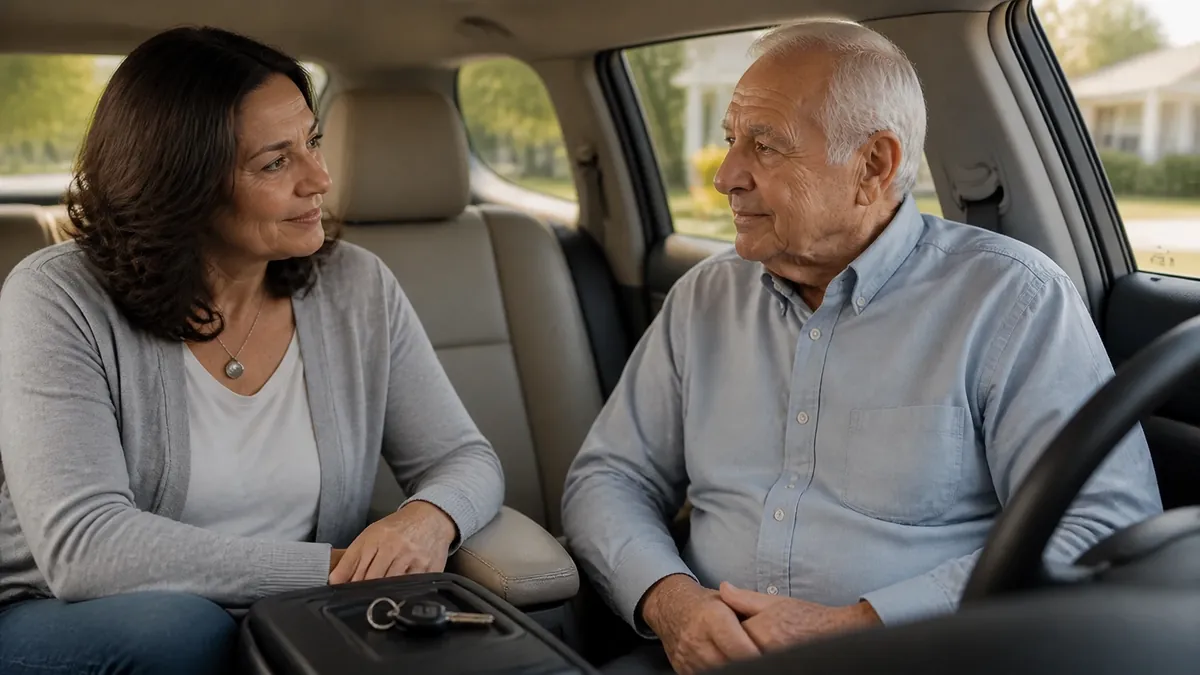
Driving does not become unsafe at one specific age. Some adults drive safely well into their 80s. Others need to limit or stop driving earlier because of changes in vision, memory, reaction time, strength, or judgment.
The right question is not, “How old is my parent?” It is, “Can my parent drive safely today?”
If you have noticed concerning changes, you can take practical steps now. A thoughtful plan can protect your parent’s safety while preserving connection, choice, and independence.
Driving should stop when safety risks become clear
Certain situations call for immediate action rather than a gradual adjustment. Your parent should stop driving and speak with a healthcare professional if they:
- Get lost on familiar roads
- Have repeated crashes, near-misses, or unexplained damage to the car
- Run stop signs or traffic lights
- Confuse the gas and brake pedals
- Cannot see road signs, pedestrians, or other vehicles clearly
- Have a medical condition that affects alertness, movement, memory, or consciousness
- Experience significant confusion or disorientation
- Receive a clear recommendation to stop driving from a doctor or driving specialist
A diagnosis of moderate or advanced dementia may also make safe driving unlikely. Memory loss can affect navigation, judgment, and the ability to respond to unexpected situations.
State driving laws differ across the country. Your parent may need to meet specific vision, testing, reporting, or renewal requirements. The National Highway Traffic Safety Administration’s guidance for older drivers is a useful national starting point, but your state’s motor vehicle agency has the final rules.
When a serious safety concern is present, do not wait for a perfect conversation. Arrange another way for your parent to get where they need to go while you seek medical and professional guidance.
These warning signs show that driving may need to change
One isolated mistake does not always mean your parent must stop driving. A pattern matters. So does the seriousness of the event.
Watch for changes in four areas.
Driving behavior
You may notice that your parent:
- Drifts across lane lines
- Makes unusually wide turns
- Misses stop signs, signals, or yield signs
- Changes lanes without checking blind spots
- Brakes suddenly or accelerates at the wrong time
- Drives far below the speed of surrounding traffic
- Has trouble merging or judging gaps
- Backs up after missing a turn or exit
- Has difficulty parking or backing out
- Collects new dents, scratches, or damage to the car, garage, or mailbox
Memory and judgment
Your parent may:
- Get lost on a route they have driven for years
- Arrive at the wrong destination
- Forget where they are going
- Become confused by familiar intersections
- React slowly to a sudden stop or unexpected obstacle
- Seem overwhelmed by traffic, construction, or detours
- Forget to use mirrors, signals, or seat belts
The American Geriatrics Society’s driving discussion guide recommends observing specific behaviors rather than making broad statements about someone’s ability.
Physical and sensory changes
Driving may become more difficult when your parent has:
- Worsening night vision or glare sensitivity
- Trouble reading signs or seeing lane markings
- Hearing loss that makes horns and sirens harder to notice
- Stiffness that limits head or shoulder movement
- Weakness that affects the pedals or steering wheel
- Difficulty getting in and out of the vehicle
- Medication side effects such as drowsiness, dizziness, or confusion
A vision exam, medication review, and physical checkup can reveal problems that may be treatable. In some cases, a driving rehabilitation specialist or occupational therapist can provide an objective assessment.
Emotional changes
Reluctance can also be a sign. Your parent may avoid driving at night, in bad weather, on highways, or in unfamiliar areas. They may become anxious, angry, or unusually defensive behind the wheel.
These changes do not automatically mean your parent must stop completely. They do show that it is time to review the driving plan.
Start the conversation with specific facts
Do not begin the discussion immediately after a stressful drive. Choose a calm time when neither of you needs to leave.
Use specific examples:
“I noticed you missed the stop sign near the grocery store last week. I’m worried about your safety, and I want us to look at some options together.”
Avoid statements such as:
- “You are a terrible driver.”
- “You are too old to drive.”
- “You have to give up your car.”
- “Everyone agrees that you cannot drive.”
These statements can make your parent feel judged or controlled. They also shift the conversation away from the actual safety issue.
Instead, use “I” statements. Explain what you observed, how it affects you, and what you would like to do next.
Ask open questions:
- “How confident do you feel driving at night?”
- “Have you noticed any changes behind the wheel?”
- “Which trips feel easiest?”
- “What would help you feel comfortable if you drove less?”
- “Would you be willing to discuss this with your doctor?”
Your parent may already feel uncertain. Giving them room to speak can make it easier to plan the next step.
Use a gradual plan when the situation allows
If there is no immediate danger, a phased plan may make the transition easier. You might begin with:
- No driving after dark
- No highway driving
- No driving during rush hour
- Short trips only
- Familiar routes only
- Driving only with a trusted passenger
- No driving in heavy rain, snow, or other difficult conditions
Set a review date. For example, you might try the plan for two weeks and then discuss what worked.
A gradual plan is not appropriate when your parent is repeatedly getting lost, has had a serious crash, confuses the pedals, or has a medical condition that makes driving unsafe. In those situations, prioritize immediate safety.
Put transportation alternatives in place before the keys are retired
The transition goes more smoothly when transportation is ready before driving stops. Your goal is to replace the function of driving, not simply remove the vehicle.
Public transportation
Your parent may be able to use:
- Local buses
- Trains
- Community shuttles
- Reduced-fare senior passes
- Travel training programs
- Paratransit for eligible riders
Start with one familiar route. Ride with your parent several times until the process feels manageable. Check schedules, walking distances, seating, transfers, and weather concerns.
Ride services and taxis
Taxis and ride-hailing services can help with medical appointments, shopping, and social activities. Your parent may need help setting up an account, saving payment information, or learning how to identify the correct vehicle.
If technology is a barrier, a family member can request rides on their behalf. Some communities also offer scheduled senior transportation rather than app-based rides.
Family and friend schedules
Create a shared calendar for:
- Medical appointments
- Grocery shopping
- Religious services
- Haircuts and personal care
- Social visits
- Exercise and community activities
Rotate responsibilities among family members. Be realistic about availability. A plan that depends on one person doing every trip may not last.
Senior transportation programs
Local senior centers, Area Agencies on Aging, faith communities, and nonprofit organizations may offer volunteer drivers, group transportation, or medical ride programs.
The national Eldercare Locator can connect you with local aging services. You can search by location or call 1-800-677-1116.
You can also use the My Senior Care Advisors guidance form to identify care and support resources based on your family’s situation.
Delivery and virtual services
Reduce unnecessary trips with:
- Grocery delivery
- Prescription delivery
- Meal delivery
- Telehealth appointments
- Online bill payment
- Video calls with family and friends
These services do not replace community connection. They give your parent more choices while you build a dependable transportation routine.
Resistance requires patience and clear boundaries
Your parent may resist because driving represents freedom, privacy, routine, or identity. Their reaction does not mean the concern is wrong. It means the change matters.
If the conversation becomes heated, stop before it turns into an argument. Say:
“We do not have to solve everything tonight. I want us to talk again after we have had time to think.”
Return to the discussion within a day or two. Keep the focus on specific safety concerns and practical alternatives.
A trusted third party may help. Consider involving:
- Your parent’s primary care provider
- An eye care professional
- A geriatrician
- A pharmacist
- A driving rehabilitation specialist
- An occupational therapist
- A close friend, clergy member, or family member your parent respects
Ask the healthcare provider to review vision, medications, strength, cognition, and medical conditions. A professional recommendation can make the conversation feel less like a family power struggle.
If your parent remains an immediate danger to themselves or others, you may need to secure access to the vehicle and seek professional advice about reporting requirements in your state. Safety takes priority, even when the decision is difficult.
Make stopping driving a new chapter
Stopping driving changes how your parent moves through the community. It does not have to end their independence.
The next chapter may include more reliable rides, safer routines, new social activities, and help with tasks that have become difficult. Involve your parent in each decision. Let them choose preferred drivers, appointment times, destinations, and services whenever possible.
Start with three steps:
- Write down the specific driving concerns you have observed.
- Schedule a vision and medical review.
- Build a transportation plan for the next two weeks.
You do not have to map out the entire future at once. Start with the next safe trip, then adjust the plan as your parent’s needs change. If your family is also evaluating home care, assisted living, memory care, or other senior services, the My Senior Care Advisors senior care guides can help you compare options and prepare for future decisions.
The goal is simple: help your parent stay safe, active, and connected without depending on a steering wheel.
This article provides general information, not medical or legal advice. Driving requirements and transportation programs vary by state and community.
Planning for more support at home?
Our advisors help families line up transportation, in-home help, and care options that keep a parent independent and safe.
Get Free Guidance →Found this helpful? Share it with someone who needs it.