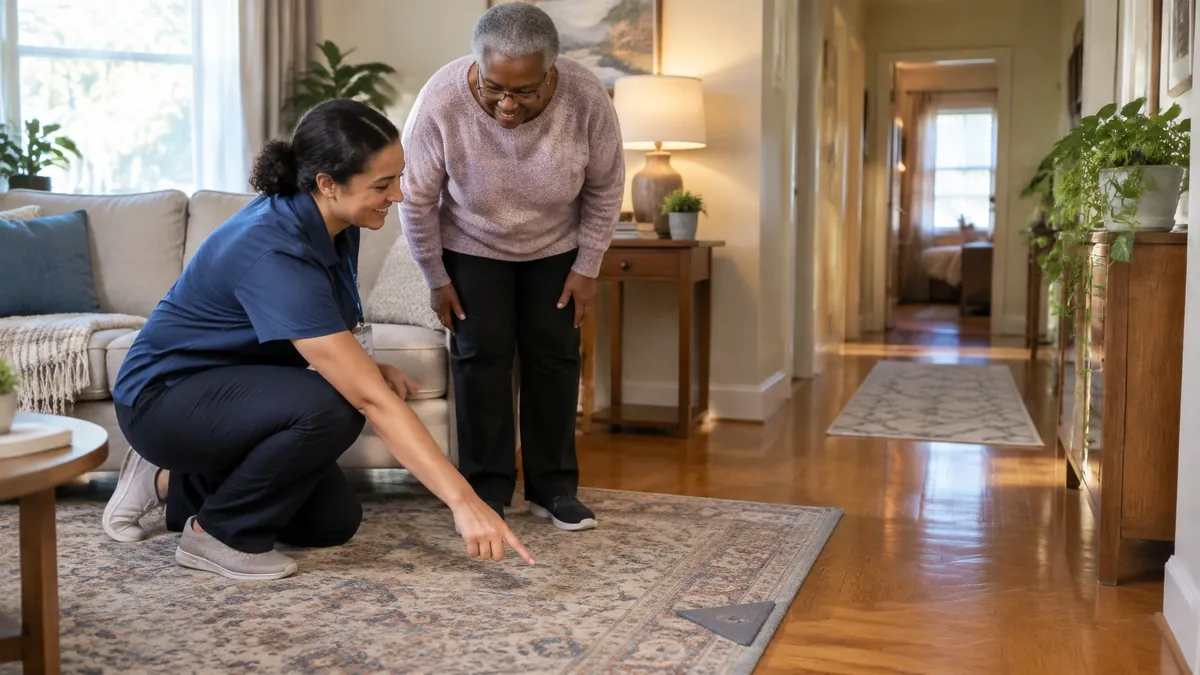
You notice your parent holding onto furniture, moving more slowly, or avoiding the stairs. Maybe there has already been a near miss. These signs give you a useful opportunity to act before a serious fall happens.
Most falls are preventable. A home safety assessment is the fastest way to find risks and make practical changes before a fall occurs.
Falls are common and serious
Falls are the leading cause of injury and injury-related death for adults age 65 and older in the United States.
According to the Centers for Disease Control and Prevention (CDC):
- About 1 in 4 adults age 65 and older — roughly 14 million people — reports falling each year.
- In 2023, falls caused more than 41,000 deaths among older adults, a rate of about 70 per 100,000.
- Older adult falls lead to roughly 3.6 million emergency department visits and more than 1 million hospital stays each year.
- Fall-related death rates among older adults have risen steadily over the past two decades.
These figures are national. Your parent may not fit the typical picture. A fall can happen to someone who is active, independent, and still living safely at home.
The good news is that risk often changes gradually. That gives you time to improve lighting, remove hazards, review medications, and strengthen balance.
Home hazards appear in every room
A room-by-room check helps you focus on specific risks instead of trying to change everything at once. Walk through the home with your parent during the day and again after dark.
Floors and hallways
Check for:
- Loose throw rugs or mats
- Clutter, shoes, books, and boxes
- Electrical cords across walking paths
- Furniture that forces your parent to squeeze through
- Spills or slippery floor surfaces
- Poor lighting between rooms
Remove loose rugs or secure them with non-slip backing. Coil cords against the wall. Keep frequently used walking paths open.
Stairs and steps
Stairs need:
- Handrails that are easy to grip
- Working lights and switches at the top and bottom
- Clear, dry steps
- Secure carpet or non-slip treads
- Clearly visible edges
Repair uneven steps promptly. If your parent avoids the stairs or feels unsteady, do not wait for a fall to consider other arrangements.
Bathroom
Bathrooms are a high-priority area because wet surfaces and transfers create several risks at once.
Look for:
- Slippery tub or shower floors
- No grab bars near the toilet or bathing area
- Towels, soap, or toiletries that require reaching or bending
- Poor nighttime lighting
- A toilet that is difficult to sit down on or rise from
Install properly anchored grab bars. Do not use towel bars for support. A shower chair, handheld showerhead, raised toilet seat, and non-slip strips may also help.
Bedroom
Many falls happen when someone gets up quickly at night.
Make sure your parent has:
- A clear path from the bed to the bathroom
- A lamp or light switch within reach
- A nightlight or motion-activated light
- Glasses, a phone, and a cane or walker nearby
- A bed height that allows both feet to rest flat on the floor
Your parent should not need to walk across a dark room or reach over furniture to find a light.
Kitchen
In the kitchen:
- Store common items between waist and shoulder height.
- Wipe up spills immediately.
- Keep cords away from walking paths.
- Avoid waxed or slippery floors.
- Never use a chair as a step stool.
If your parent needs help reaching high shelves, move those items or arrange assistance. Independence does not require taking avoidable risks.
Living room and entrances
Use stable chairs with arms and firm seats. Move footstools, small tables, and decorative items away from main paths.
At entrances, check for:
- Uneven walkways
- Loose porch steps
- Missing handrails
- Poor lighting
- Leaves, snow, ice, or other outdoor debris
The CDC’s Check for Safety home fall prevention checklist can help you complete a more detailed review.
Health factors increase fall risk
Home hazards are only part of the picture. Several health factors can make a fall more likely.
Medications
Some medications cause dizziness, drowsiness, confusion, blurred vision, or a drop in blood pressure when standing. Risk may increase when your parent takes several medications or recently changes a dose.
Ask a doctor or pharmacist to review all prescriptions, over-the-counter medicines, and supplements. Bring the medication bottles or an updated list. Do not stop a medication without medical guidance.
Vision
Poor vision makes it harder to see steps, cords, changes in floor height, and obstacles.
Schedule regular eye exams. Make sure glasses are current and used as prescribed. Improve lighting and reduce glare. If bifocals or progressive lenses make stairs difficult, ask an eye-care professional about safer options.
Footwear and foot pain
Socks, loose slippers, backless shoes, and smooth soles can increase slipping. Encourage well-fitting, closed-back shoes with low heels and non-slip soles, including indoors.
Foot pain, numbness, bunions, or other foot problems can also affect balance. A doctor or podiatrist can help address these issues.
Muscle strength and balance
Weak legs and reduced balance make it harder to recover from a stumble.
With medical approval, your parent may benefit from strength and balance activities such as supervised physical therapy, tai chi, or a community fall-prevention program. A clinician can also perform simple assessments, including the Timed Up and Go or chair-stand test.
A three-question check identifies fall risk
Ask your parent these questions calmly:
- Have you fallen in the past year?
- Do you feel unsteady when standing or walking?
- Are you worried about falling?
A “yes” to any question is a reason to speak with a healthcare professional about a fall-risk assessment. These questions come from the CDC’s STEADI fall-prevention program.
Then walk through the home together:
- Can your parent get from the bed to the bathroom without stepping over anything?
- Can they turn, sit, and stand safely in the bathroom?
- Can they see every stair clearly?
- Can they reach daily items without climbing or bending too far?
- Do they use their cane or walker consistently?
- Do they feel dizzy when standing?
- Do they have a safe place to sit while dressing?
Write down what you find. Start with the three changes that reduce the most immediate risk.
The conversation should protect independence
Your parent may hear “fall prevention” as “you cannot live independently.” The way you begin the conversation matters.
Choose a calm time. Avoid starting immediately after a near fall or disagreement. Ask permission before making suggestions:
“Can we walk through the house together? I want to see what would make it easier for you to keep doing things your way.”
Focus on goals, not limitations:
- “Let’s make the bathroom safer so you can keep bathing independently.”
- “Let’s improve the lighting so you can continue using the kitchen at night.”
- “Which change would make you feel more comfortable?”
Give your parent choices. They may agree to brighter lights before they agree to grab bars. Progress does not need to happen all at once.
Avoid taking over tasks your parent can still do safely. The goal is to remove unnecessary hazards while preserving control, routine, and dignity.
Professional help is appropriate when risk changes
A home safety assessment is a good first step, especially after a near fall, a change in mobility, or a new diagnosis.
Consider additional support when:
- Your parent has fallen or nearly fallen more than once.
- They need help bathing, dressing, transferring, or walking.
- They forget to use a cane or walker.
- They feel dizzy, confused, or unusually sleepy.
- Medication changes affect balance or alertness.
- You cannot visit often enough to monitor safety.
- You are providing more hands-on help and becoming exhausted.
An occupational therapist (OT) can assess how your parent moves through the home and recommend practical equipment or modifications. A doctor or pharmacist can complete a medication review. Physical therapy can address strength, balance, gait, and safe use of mobility equipment.
In-home care may help with bathing, dressing, meals, supervision, transportation, and other daily tasks. If your family needs regular breaks, explore our caregiver burnout article and respite care resources.
If remaining at home becomes difficult, comparing settings can make the next decision clearer. Our resources on in-home care vs. assisted living and downloadable senior care guides can help you understand the differences.
If your parent hits their head, loses consciousness, has severe pain, cannot stand, or shows sudden confusion or weakness after a fall, seek emergency medical help.
Start with a home safety assessment
You do not need to solve every care question today. Start by walking through the home with your parent and identifying the most immediate risks.
Then speak with a healthcare professional about medications, vision, strength, and balance. If you are unsure which changes or support services fit your family, you can talk with a senior care advisor about the next step.
A home safety assessment helps you find the risks before a fall happens. Small changes now can help your parent remain safer, more confident, and more independent at home.
Want a professional set of eyes on your parent’s home?
Our Home Safety Assessment identifies fall risks room by room and gives you a clear plan to fix them.
Explore Concierge Services →Found this helpful? Share it with someone who needs it.