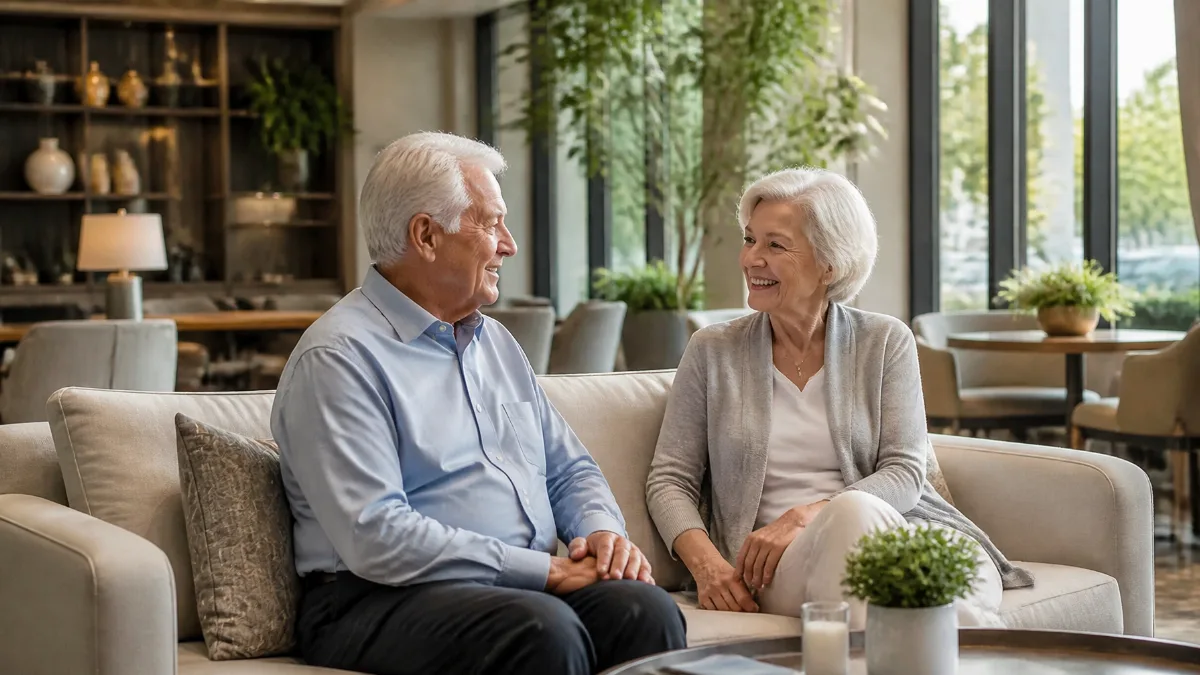
The traditional nursing home is a place many people fear. You might picture long, sterile hallways and the faint smell of bleach. You might imagine a hospital-like setting where people lose their identity. This image is stuck in our collective memory, but in 2026, it is rapidly becoming a relic of the past.
The institutional "facility" is dying. It is being replaced by something better.
If you are looking for care for a parent today, you aren't just choosing between "home" and "a home." You are entering a new era of senior living designed for dignity, technology, and genuine connection. You haven't found the right thing yet because the options have changed faster than the conversation around them.
At My Senior Care Advisors, we see this shift every day. Families come to us overwhelmed by the old stigma, only to realize that modern senior care looks nothing like they expected.
The end of the hospital-style ward
Most people do not want to live in a hospital. For decades, nursing homes were built on a clinical model. They prioritized efficiency and medical oversight over the human experience. Residents lived in semi-private rooms with shared bathrooms. Schedules were rigid. Meals were served on trays.
This model is failing because seniors and their families are demanding more.
The shift toward "person-centered care" is no longer just a buzzword. It is the new standard. In 2026, the focus has moved from "managing patients" to "supporting residents." This means smaller environments, private suites, and flexible daily rhythms. You are not a failure for realizing your loved one needs more help than you can give at home. You are simply looking for a setting that respects who they are.
The Green House Project model
One of the biggest disruptors in the industry is the "small-house" model, often referred to as the Green House Project. These are licensed nursing homes, but you would never know it by looking at them.
Instead of a massive building with 100 residents, a Green House is a real home for about 10 to 12 people. Everyone has a private bedroom and bathroom. The heart of the home is a large, open kitchen and dining area where residents and staff eat together.
The clinical equipment is hidden away. The "nurses' station" doesn't exist. Instead, caregivers, often called "Shahbazim", are deeply integrated into the household. They cook, they clean, and they provide high-level care while building real relationships.
If your loved one needs 24/7 medical supervision but hates the idea of a facility, this model is the answer. It provides the highest level of care without the institutional weight. You just haven't looked in the right neighborhood yet.
Boutique residential care homes are the new hidden gems
If a Green House sounds too large, you might be looking for a boutique residential care home. These are often regular houses in quiet, residential neighborhoods that have been professionally converted to care for 5 to 10 seniors.
These homes offer a level of intimacy that even the best assisted living communities can’t match. Because the staff-to-resident ratio is so low, your parent gets personalized attention. If they want a cup of coffee at 10 PM, someone is there to make it. If they want to sit on the porch and watch the birds, that is their backyard.
Boutique homes are perfect for seniors who find large buildings confusing or overwhelming. They are particularly effective for memory care. The familiar layout of a "house" reduces anxiety and prevents the "wandering" often seen in larger, more complex facilities. It feels like home because it is a home.
High-acuity assisted living fills the gap
In the past, if you needed help with a catheter or had complex medication needs, you went to a nursing home. There was no middle ground. That gap has disappeared.
Modern assisted living communities have stepped up to handle "high-acuity" needs. In 2026, many of these communities have full-time nursing staff and sophisticated medical tech on-site. They can manage chronic conditions and mobility issues that used to require a clinical setting.
This allows seniors to stay in a more vibrant, social environment for much longer. You don't have to choose between safety and lifestyle. You can have both. Many of our facility partners now offer "enhanced" licenses that allow them to provide nursing-level care in a luxury apartment setting.
Technology is making care invisible and effective
The fear of the "nursing home" often stems from a fear of losing independence. Tech in 2026 is actually giving that independence back.
We are no longer relying on loud call bells or invasive check-ins. Instead, we use:
- AI-Driven Fall Prevention: Senseless sensors that detect changes in gait and predict falls before they happen.
- Remote Patient Monitoring: Wearables that track vitals in real-time, alerting nurses to issues immediately.
- Social Connectivity: High-def video walls and easy-to-use tablets that keep families connected daily, not just on weekends.
Technology doesn't replace the human touch; it frees up the staff to focus on it. Instead of spending hours on paperwork, caregivers spend time talking to your parents. You haven't lost your connection to your loved one; you’ve gained a digital window into their well-being.
Dignity is the priority in 2026
The "nursing homes" of the past were about survival. Modern options are about thriving.
Dignity is found in the small things: choosing your own wake-up time, having a chef-prepared meal that actually tastes good, and living in a space that you are proud to show your grandkids. 2026 standards prioritize these "hospitality" elements just as much as clinical outcomes.
We know the transition is hard. It feels like a massive life change because it is. But the "institutional" fear you are carrying doesn't have to be your reality. There are communities that feel like boutique hotels and homes that feel like... well, homes.
Finding the right path forward
The options are better than they have ever been, but they are also more complex. Navigating the difference between a high-acuity assisted living community and a boutique residential home requires local knowledge and an understanding of your specific needs.
You don't have to do this alone. At My Senior Care Advisors, we specialize in cutting through the noise. We help you find the modern alternatives that fit your family's unique situation and budget.
If you are overwhelmed by the options or just don't know where to start, we are here to guide you. You can explore our guides and resources or reach out directly for a personalized consultation.
The traditional nursing home might be dead, but the future of senior care is very much alive. Let’s find the right version of it for you.
Ready to explore modern care options? Get help from a local advisor today.
Found this helpful? Share it with someone who needs it.